



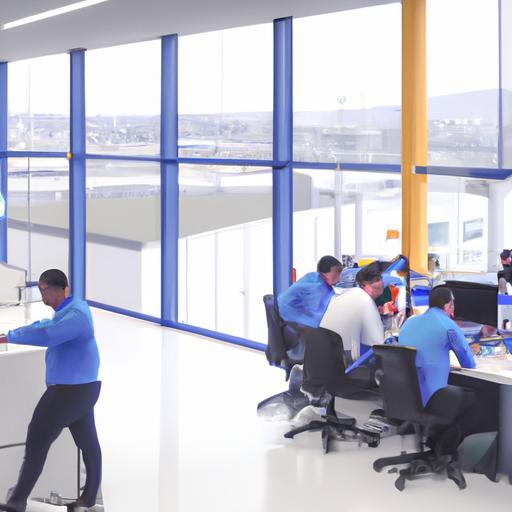
Robotics Revolutionizes Cleaning Services in Facility Management
In 2026, the integration of robotics within the facility management and cleaning services industry has reached new heights, substantially transforming operational efficiency and service delivery. The emphasis on cost reduction, regulatory compliance, and environmental sustainability has prompted firms to adopt cutting-edge robotic solutions, fundamentally changing how cleanliness and safety are ensured in public and private spaces.
The current market conditions reflect a pressing need for efficiency as businesses rebound from recent economic downturns. Labor shortages have escalated operational challenges, prompting facility managers to seek innovative technologies that can complement human efforts. Robotic systems are no longer viewed as futuristic luxuries but as indispensable tools. From autonomous floor scrubbers to AI-driven cleaning drones, the range of robotics employed has expanded rapidly, offering numerous advantages—from heightened accuracy and consistency in cleaning tasks to real-time data analytics that help monitor performance and enhance service quality.
In addition to operational improvements, 2026 has seen the introduction of new regulatory standards focusing on sanitation and-toxic cleaning practices. These regulations require cleaning vendors to demonstrate compliance through robust documentation and data reporting. Robotics simplifies adherence to these standards by providing automated logs and clean traceability, ensuring that cleaning processes meet the stringent criteria laid out by health and safety authorities. This has encouraged facility managers to invest heavily in robotic cleaning technologies not only for their operational benefits but also as a means of compliance.Industry experts have noted that the landscape is being reshaped by several factors, including advances in AI technology, machine learning, and the Internet of Things (IoT). With AI-driven robotics capable of recognizing different types of surfaces and adapting cleaning methods accordingly, effectiveness is enhanced. As Gary Thompson, a leading consultant in facility management solutions, points out, “The rise of autonomous systems is about more than just labor substitution; it’s an chance to re-engineer how we think about cleanliness and maintenance protocols. Facility managers are leveraging these technologies to create smarter environments.”
Furthermore, the availability and affordability of robotics have become critical factors. The initial investment in robotic systems can be steep; however, the long-term cost savings associated with labor reduction and increased productivity make it compelling. As competition drives innovation across the industry, manufacturers are releasing increasingly efficient models at lower price points, making robotics more accessible to mid-sized facility management firms.
In practical terms, facility managers are now able to deploy robotic solutions to optimize cleaning schedules, reduce downtime in critical areas, and improve the overall user experience in buildings. For example, office buildings utilizing floor-scrubbing robots can maintain cleanliness after hours, ensuring that premises are ready for employees each morning. The robotic systems equipped with sensors help avoid obstacles, thereby reducing potential damage and maintaining a consistently clean surroundings.
Though, transitioning to a robotic-supported workforce is not without challenges. Training staff to work alongside robots, addressing technological malfunctions, and integrating new systems into existing workflows require thoughtful planning and strategic execution. As Vanessa Mills, a regional operations manager, notes, “The human element in facility management is pivotal; we must ensure that the workforce is empowered to leverage these technologies effectively, fostering an environment where robots enhance human capability rather than replace it.”
looking ahead,the future of robotics in the cleaning services industry appears promising,as the convergence of advanced technologies makes cleaning both more efficient and environmentally friendly. Biodegradable cleaning products and resource-efficient robotics are becoming increasingly prevalent,aligning with the industry’s shift toward sustainability. The adoption of green cleaning protocols not only satisfies regulatory requirements but also appeals to eco-conscious clients and tenants, creating further opportunities for growth and differentiation.
As facility managers adapt to an increasingly competitive landscape, the successful integration of robotics will be a crucial factor in enhancing service delivery and achieving operational excellence. With predicted continued advancements in machine learning and AI capabilities, the cleaning services sector can expect robotics to play an integral role in shaping cleaner, safer environments.
Robotics in cleaning services is not just a trend; it is the evolution of facility management as we know it. With these technological enhancements, the industry stands at the precipice of meaningful change, making the quest for cleanliness not just a goal, but a revolutionary journey driven by innovation and sustainability.



Related Articles
occupancy sensors – Facility Management Industry Update
Groundbreaking Innovations in Occupancy Sensors Revolutionize Facility Management in 2026 As facility...

specialist cleaning – United Kingdom Industry Update
Specialist Cleaning Sector in the UK Adapts to Evolving Market Demands and...
environmental auditing – Europe Industry Update
Environmental Auditing Gains Momentum in Europe’s Facility Management Sector In 2026, the...


operational excellence – United States Industry Update
Operational Excellence at the Forefront of 2026’s facility Management Landscape In 2026,...

Leave a comment