


AI-powered cleaning – Cleaning Services Industry Update
 FacilicomMarch 30, 20262 Mins read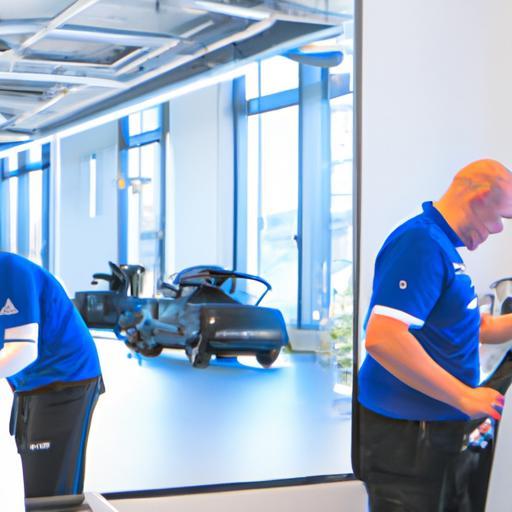
AI-Powered Cleaning Revolutionizes Facility Management in 2026
In 2026, the facility management and cleaning services industry is experiencing a groundbreaking shift with the introduction of advanced AI-powered cleaning technologies, setting new standards in efficiency and sustainability. Leading firms are integrating machine learning algorithms and robotics into their cleaning operations, significantly enhancing service quality and resource management.
The AI revolution comes in response to several critical industry challenges, including labor shortages and rising operational costs. As traditional cleaning methodologies struggle to keep pace with contemporary demands, AI-powered solutions are proving to be not just innovative but essential.With advanced analytics capabilities, these technologies enable real-time monitoring and predictive maintenance, allowing facility managers to allocate resources more effectively and reduce downtime.
Recent developments include the launch of autonomous cleaning robots equipped with machine learning algorithms capable of navigating complex environments.These robots can assess the cleanliness of an area,identify high-traffic zones requiring additional attention,and even adapt cleaning schedules based on usage patterns. Companies like CleanTech Innovations and RoboClean have rolled out pilot programs this year, showcasing the tangible benefits of AI integration, including a 30% reduction in operational costs and improved cleanliness metrics across facilities.
Industry experts are weighing in on these transformative changes.According to Dr. Sarah Thompson,a leading researcher in facility management technologies,“AI is not just a tool; it’s a game changer. The industry’s future hinges on adopting these innovations to meet the growing sustainability and efficiency demands.” Furthermore, the ongoing push for greener operations has resulted in the establishment of new industry standards aimed at reducing environmental footprints. In 2026, the International Facility Management Association (IFMA) has introduced guidelines advocating for the use of AI solutions that comply with sustainability benchmarks, ensuring that cleaning processes consume less water and energy.
for facility managers, the implications are profound. By harnessing AI technologies, they can not only streamline operations but also improve employee satisfaction. With machines handling labor-intensive tasks, staff can focus on higher-value functions, such as customer service and facility planning. Additionally, the data analytics provided by AI platforms can inform better decision-making, leading to optimized cleaning schedules that align with organizational needs and fluctuating occupancy rates.However,the transition to AI-powered cleaning is not without challenges. Initial investment costs for integrating new technologies can be prohibitive for smaller firms. Moreover, the workforce must adapt to working alongside automated systems, frequently enough requiring reskilling and training efforts that may not align with immediate operational demands. The industry must also address cybersecurity concerns related to increased reliance on interconnected devices.
Looking ahead, the trajectory of AI-powered cleaning suggests a continued trend toward automation, with an emphasis on enhanced user experiences and operational efficiency.Predictions indicate that by the end of 2026, nearly 50% of facility management firms will deploy AI solutions in some capacity, pushing for meaningful cost savings and improved service offerings.
as 2026 unfolds, the integration of AI-powered cleaning technologies stands poised to redefine the facility management and cleaning services industry. With a focus on sustainability, operational efficiency, and adapting to emerging market conditions, industry leaders who embrace these innovations will likely lead the way in navigating the evolving landscape. As facility managers explore these advancements, the promise of smarter, cleaner environments becomes an achievable reality.



Related Articles

facility apps – Facility Management Industry Update
Facility Apps transform the Facility Management Landscape in 2026 The facility management...

cleaning specifications – United Kingdom Industry Update
UK Facility Management Industry Adopts Stricter Cleaning Specifications in 2026 In 2026,...

ESG reporting – Europe Industry Update
ESG Reporting Gains Traction in Europe’s Facility management and Cleaning Services Sector...



vendor management – United States Industry Update
Vendor Management Becomes Central Focus in 2026 Facility Management Landscape As the...

Leave a comment